Frequently Asked Questions
What is the XTCERA 630 dental milling machine?
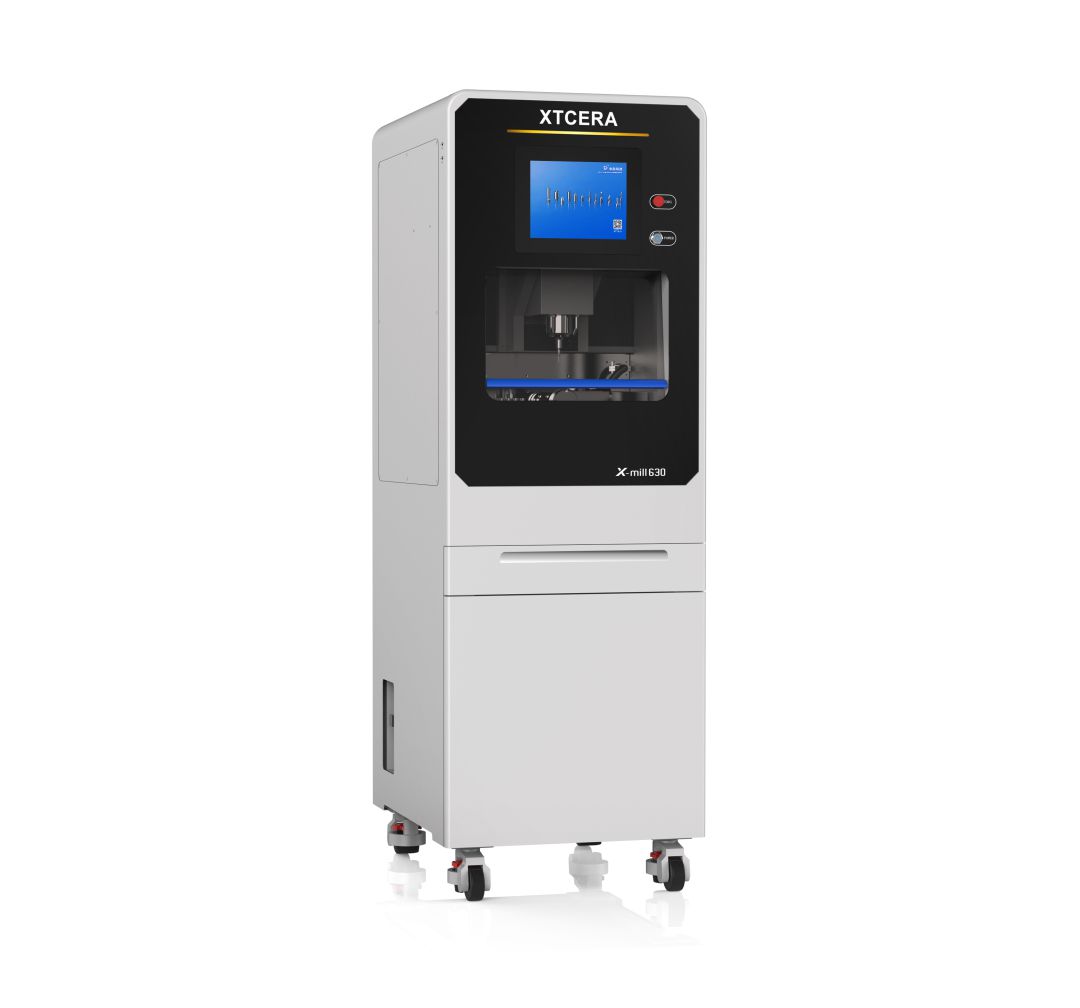
AGKEM's XTCERA 630 is a CAD/CAM dental milling machine designed for the digital production of dental restorations and prosthetic components. It converts digitally designed cases into precisely milled restorations using compatible dental materials.
It is intended for dental labs and digital production centers that want to manufacture restorations such as crowns, bridges, implant-related components, and other prosthetic cases, depending on the machine’s configuration and supported materials.
What materials can be milled using the XTCERA 630?
AGKEM's XTCERA 630 is a wet dental milling machine designed for processing dental materials that require liquid cooling during machining.
Depending on the approved configuration, it can be used for Glass Ceramics, PMMA, Wax, Titanium, and other compatible wet-milling materials. Exact material compatibility should always be checked against the manufacturer’s specifications, along with the appropriate burs and milling parameters.
Which dental laboratories can benefit from the XTCERA 630?
AGKEM's XTCERA 630 can benefit dental labs that regularly handle restorations requiring wet milling and want to strengthen their in-house CAD/CAM production.
It is particularly relevant for digital dental labs, prosthetic laboratories, implant-focused labs, and production centers that work with compatible wet-milling materials. Labs looking for greater control over production quality, turnaround time, workflow efficiency, and outsourcing costs may also consider adding the XTCERA 630 to their digital workflow.
Is the XTCERA 630 suitable for large-scale dental labs production?
AGKEM's XTCERA 630 can be suitable for dental labs with high production requirements, particularly when a significant part of their workflow requires wet milling.
For large-scale production, dental labs should evaluate daily case volume, milling speed, spindle performance, automation, tool capacity, material compatibility, machine uptime, and maintenance requirements. Dental labs with very high workloads may also consider using multiple milling machines to increase capacity and reduce production bottlenecks.
What features are important for high-volume dental milling?
For high-volume dental milling, important features include fast processing speed, powerful and reliable spindle performance, high milling accuracy, automatic tool changing, and efficient CAM software integration.
Dental labs should also consider machine durability, continuous-operation capability, tool capacity, material compatibility, easy calibration, effective cooling or dust management, and simple maintenance. Reliable technical support, spare-parts availability, and low machine downtime are especially important when the milling machine is used for daily large-scale production.




Reviews
There are no reviews yet.