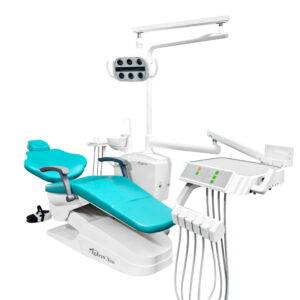
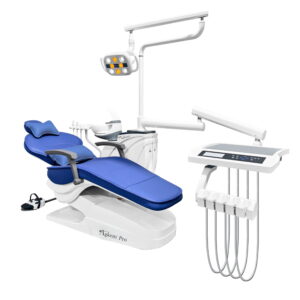
A dental chair is a central part of the clinical setup, supporting patient positioning while helping the dentist and dental assistant access the instruments and systems required during treatment.
For a dental clinic, choosing the right chair involves more than selecting a comfortable patient seat.
The chair, delivery system, operating light, suction, cuspidor, controls and other integrated components can influence how efficiently the dental operatory functions.
For dentists, dental hospitals, dental colleges and other dental professionals in India, the selection process should therefore consider patient comfort, dentist ergonomics, assistant accessibility, movement, hygiene, equipment integration, maintenance and long-term support.
AGKEM’s Dental Chair category currently includes the Agkem Neo Dental Chair and Agkem Pro Dental Chair, giving dental professionals options to evaluate according to their clinic’s requirements.
A dental chair is a patient-support and treatment platform used in a dental operatory. It allows the patient to be positioned for different procedures and can form part of a broader dental unit that brings together chair movement, instruments, lighting, suction, water systems and other clinical components.
The exact configuration varies by model. A dental chair may include or work alongside an operating light, delivery system, handpiece tubing, three-way syringe, suction, cuspidor, foot control and other equipment.
For this reason, dentists comparing dental clinic equipment should evaluate the complete chair configuration instead of looking only at the chair upholstery or movement system.
Dental chairs can be grouped by their movement systems and overall configuration. The right type depends on the procedures performed, operational space, workflow and budget.
Basic configurations focus on essential patient positioning and treatment requirements. They may be suitable for clinics that need a straightforward setup without extensive integrated functionality.
An electric dental chair uses powered movement for functions such as positioning the seat or backrest. The exact control system and movement options vary by model.
Electric systems can be useful for clinics that prioritise controlled positioning and a more integrated chairside workflow.
Hydraulic dental chairs use hydraulic mechanisms for movement. Their operation and maintenance requirements differ from electrically powered designs, so buyers should compare the complete mechanism and service support rather than assuming one system is automatically better.
An advanced dental unit can combine the patient chair with multiple integrated clinical components, such as delivery systems, lighting, suction and water controls.
An integrated dental chair is designed as part of a more complete treatment unit. This can help organise frequently used equipment around the treatment area and may reduce the need to manage separate components.
When comparing these categories, dentists should focus on actual clinical requirements rather than choosing a chair simply because it has more functions.
The best dental chair for clinic use is one that supports the way the dentist, assistant and patient interact throughout treatment.
Headrest design, upholstery, arm support and smooth positioning can affect the patient’s experience. A chair should provide adequate support while allowing practical access to the treatment area.
For example, the Agkem Neo lists an adjustable headrest, double armrest design and PU leather upholstery, while the Agkem Pro lists an adjustable headrest, double armrest support and medical-grade silicone leather upholstery.
Smooth and stable movement matters because the dentist may need to change the patient’s position during treatment. The movement system should be evaluated for control, stability and how well it fits the clinical workflow.
Instrument placement and chair positioning can affect how easily the dentist reaches the treatment area. An accessible delivery system can reduce unnecessary movement during procedures.
Both current AGKEM dental chair models list an under-hanging delivery system.
For clinics using assisted dentistry, frequently used systems such as suction and syringes should be accessible to the assistant without disrupting the dentist’s working position.
The Neo lists an integrated suction system, three-way syringe support and strong and weak suction.
An operating light should provide suitable illumination and be easy to position. When comparing models, look at the illumination specifications as well as the physical positioning of the light.
The Agkem Neo lists a six-LED operating light with 7,000 to 40,000 lux intensity, while the Agkem Pro lists an eight-LED operating light with a published intensity range of 7,000 to 50,000 lux.
The cuspidor and water system are used regularly during treatment, so ease of cleaning and operation should be considered.
The Neo lists a rotatable ceramic cuspidor with automatic flushing and automatic water supply. The Pro lists a rotatable ceramic cuspidor.
A foot control can allow certain chair or treatment functions to be operated without repeatedly reaching for a hand control.
This can help keep routine controls within easy reach during procedures.
Dental chair surfaces should be practical for regular clinical cleaning. Consider the upholstery material, seams, exposed surfaces and ease of access during routine hygiene procedures.
The chair should remain stable during positioning and treatment. Buyers should ask about construction, movement components and the manufacturer’s specifications rather than judging build quality from appearance alone.
A dental chair is a long-term investment, so maintenance requirements and parts availability matter. Before purchase, ask how replacement components are sourced and who handles technical servicing.
For frequently used dental equipment in India, support can be an important part of the buying decision.
Review warranty terms, service arrangements, spare-part availability and technical assistance before placing an order.
The dental chair price in India depends on configuration and the equipment included with the unit.
A chair with basic functionality may have a very different cost from a more integrated system with advanced controls and additional clinical components.
Important pricing factors include:
A useful dental chair buying guide should therefore compare complete specifications rather than an advertised starting price.
AGKEM’s current product pages for the Neo and Pro Dental Chairs use an enquiry-based purchase process rather than displaying a fixed public price.
Buyers can request a quotation based on their required configuration.
Choosing a dental chair for clinic use starts with the workflow, not the product catalogue.
Measure the operatory before ordering. Account for the chair, dentist stool, assistant position, patient access and movement around the unit.
A clinic performing general dentistry may have different requirements from one focused on orthodontics, endodontics, prosthodontics or other procedures.
Frequent daily use makes durability, workflow and service support increasingly important. A chair used by several operators may also require a practical and intuitive control system.
Decide which systems need to be integrated, including handpiece tubing, suction, three-way syringes, operating light, cuspidor and other equipment.
Check whether the delivery system and assistant controls allow frequently used instruments to be reached without unnecessary movement.
Consider the equipment package, installation arrangements, accessories, maintenance and future replacement requirements, not only the initial chair cost.
A new clinic may eventually add additional operatories or digital equipment. Choosing compatible clinical equipment can make future planning easier.
Routine maintenance helps keep a dental chair suitable for day-to-day clinical use. Clinics should follow the manufacturer’s care instructions and establish a regular preventive maintenance routine.
General considerations include:
Internal electrical or mechanical components should not be dismantled or repaired without appropriate expertise.
AGKEM’s offers two products in its Dental Chair category: the Agkem Neo Dental Chair and the Agkem Pro Dental Chair.
The Agkem Neo Dental Chair comes with independent chair and backrest movement, an under-hanging delivery unit, a six-LED operating light, adjustable headrest, rotatable ceramic cuspidor, integrated suction system and foot-control pedal.
It includes a button-plate control system, 7,000 to 40,000 lux operating light intensity, a Chinese Xinyi motor, PU leather upholstery and a 230V / 50Hz power supply.
The Agkem Pro Dental Chair is listed with a Denmark Ti motor system, touch-based chair controls, an eight-LED operating light, under-hanging delivery system, rotatable ceramic cuspidor and adjustable headrest.
The Agkem Pro Dental Chair has medical-grade silicone leather upholstery, 7,000 to 50,000 lux light intensity, a 230V / 50Hz power supply and included strong and weak suction.
A dental chair is a patient-support and positioning system used during dental treatment. Depending on its configuration, it can form part of an integrated dental unit that includes components such as an operating light, delivery system, suction, cuspidor, foot control and other chairside equipment.
The cost of a dental chair varies according to its configuration, movement system, materials, integrated equipment, accessories, brand and service arrangements.
AGKEM currently uses an enquiry-based pricing process for its Neo and Pro models, so buyers should request a quotation for the required configuration.
The best dental chair for a new clinic is one that matches the procedures, space, patient volume, dentist workflow and budget of the practice.
Buyers should prioritise essential clinical functionality, ergonomics, maintenance and support rather than choosing a model based only on the number of features.
Important dental chair features include patient positioning, chair movement, operating light, delivery system, suction, cuspidor, foot control, upholstery, control interface, stability, cleanability and service support.
The importance of each feature depends on the type of dental treatment performed and the way the operatory is organised.
A dental chair primarily supports and positions the patient, while a dental unit can integrate the chair with treatment equipment such as handpiece connections, suction, operating light, cuspidor, water systems and controls.
Some products are sold as integrated dental chair units, so the exact meaning depends on the manufacturer's configuration.
Electric and hydraulic chairs use different movement systems, and neither is automatically better for every clinic.
Compare movement, control, reliability, maintenance, service support and compatibility with your workflow.
The right choice depends on how the chair will be used and which features matter to the treating team.
Patient comfort is an important consideration because patients may remain positioned in the chair for extended periods.
Features such as adjustable headrests, supportive upholstery, armrests and smooth positioning can contribute to a more comfortable treatment setup.
Service frequency depends on the manufacturer's recommendations, usage and the chair's configuration. Clinics should follow the relevant maintenance schedule and arrange professional inspection when required.
Regular preventive maintenance can also help identify movement, water, suction, electrical or mechanical issues before they affect normal operation.
Check the complete configuration, chair dimensions, movement system, control method, operating light, delivery system, suction, cuspidor, upholstery, included accessories, maintenance requirements, spare parts, warranty terms and technical support.
Also confirm that the chair can be installed appropriately within your available operatory space.
There is no single lifespan that applies to every dental chair. Actual service life depends on construction, usage, maintenance, environment and availability of replacement parts.
Rather than relying on a generic lifespan figure, buyers should ask the supplier about maintenance requirements, support and long-term parts availability.
Customisation depends on the model and the manufacturer's available configurations. Some elements may be selectable while others may be fixed.
Ask the supplier which accessories, controls or clinical components can be specified before purchase and whether any changes affect the quotation.
Not necessarily. Installation arrangements vary by supplier and purchase configuration.
The quotation should clearly state whether installation is included, charged separately or dependent on site requirements.
Buyers should clarify this before finalising the order.
After-sales support should be clearly defined before purchase. Ask about warranty coverage, technical assistance, spare parts, servicing procedures, troubleshooting and the process for reporting equipment issues.
Clear support arrangements are particularly important for dental equipment that is used daily.
Dental chairs can be purchased directly from dental equipment suppliers, manufacturers and authorised distribution channels.
AGKEM's current Dental Chair category lists the Agkem Neo and Agkem Pro Dental Chair, with enquiry options available on their individual product pages.
A dental chair is often one component of a broader dental clinic equipment setup. Depending on your practice requirements, related AGKEM categories can include:
For CBCT equipment, dental professionals should review the relevant CBCT category available through AGKEM’s Dental Clinic equipment section and confirm the current products and specifications before purchase. AGKEM’s website navigation places CBCT alongside Dental Chair, Dental X-ray/RVG and Intraoral Scanner under Dental Clinic equipment.
The right dental chair should support the complete clinical workflow, not simply meet a price point. Compare the configuration, ergonomics, equipment integration, maintenance requirements and support arrangements before making a purchasing decision. For current product specifications and quotations, review the individual AGKEM product pages and contact AGKEM with your clinic’s requirements.