Disclaimer: Only payments made via the official UPI QR code under our company name are valid. Any transactions made to other QR codes, links, or third-party accounts will not be recognized. We are not responsible for losses, fraud, or misdirected payments. Please verify our company name before completing any payment.

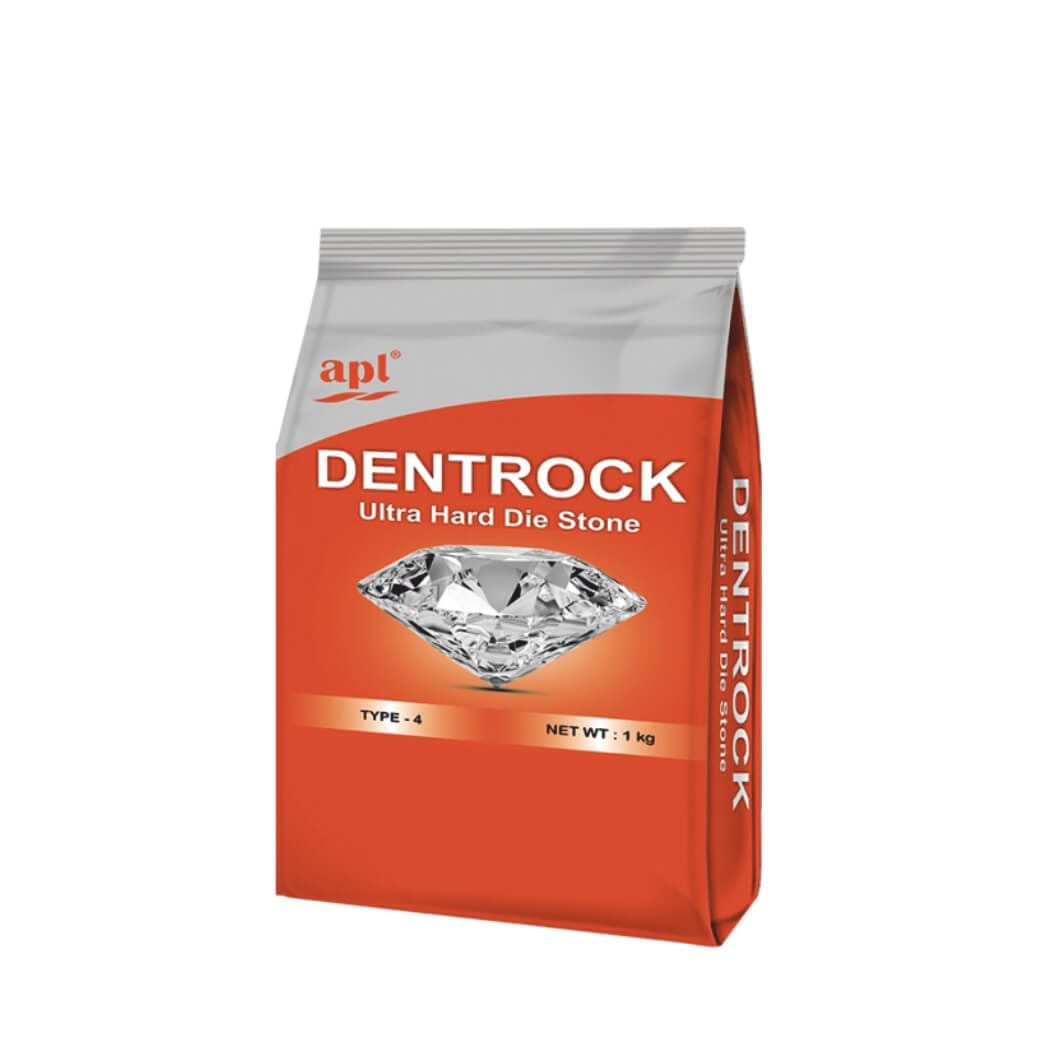
DENTROCK DIE STONE TYPE IV

Models in fixed complete or partial prosthesis
Models in implant prothesis

Description

  • Very low expansion
  •  Splintering resistant
  •  Excellent casting under vibration
  •  Abrasion resistant
  •  High compressive strength

Dent Rock is an extra hard stone with high compressive strength, recommended for making master models for fixed prostheses.

Advantages

  • Time savings in data acquisition with optical scanners
  • Greater precision compared to use of reflective sprays
  • Cleaner environment

packaging  

Dentrock Sandy Brown ( type -4 ) – 15 kg

Dentrock Grey ( type -4 ) – 15 kg

 

Reviews

There are no reviews yet.

Be the first to review “DENTROCK DIE STONE TYPE IV”

Your email address will not be published. Required fields are marked *

Frequently Asked Questions

What is Dent Rock dental stone used for?
Dent Rock is an extra-hard dental stone with high compressive strength, recommended for making master models for fixed prostheses. Its material properties support the preparation of detailed dental models in lab workflows. It is suitable for dental professionals seeking a strong and durable model-making material.
What are the key features of Dent Rock dental stone?
Dent Rock offers very low expansion, splintering resistance, abrasion resistance, and high compressive strength. It also provides excellent casting performance under vibration, according to the supplied product information. These features make it suitable for demanding dental model-making applications.
How does Dent Rock help improve dental model accuracy?
Dent Rock is designed with very low expansion, helping limit dimensional changes during model preparation. It is recommended for master models used in fixed prosthesis workflows, where precision is important. Its high compressive strength also supports the durability of the finished model.
Why does AGKEM Star Bond+ contain chromium and molybdenum?
Chromium and molybdenum are key components of the Star Bond+ nickel-based alloy, accounting for 24% and 10% of its stated composition, respectively. The product information highlights the alloy's resistance to corrosion and heat. For detailed performance requirements, refer to the technical documentation for the specific product.
Is AGKEM Star Bond+ suitable for dental ceramic applications?
Yes, AGKEM Star Bond+ is specifically described as an alloy for ceramic veneering applications. Its nickel-based composition and stated resistance to corrosion and heat are key features of the product. Dental laboratories should confirm compatibility with their intended ceramic system and follow the manufacturer's processing guidelines.

Explore Categories

Testimonials

Patient Experiences That Speak for Themselves