Frequently Asked Questions
What is Co-Cr alloy used for in dental labs?
Cobalt-Chromium (Co-Cr) alloy is widely used in dental labs to manufacture strong and durable metal dental restorations and frameworks.
Common applications include crowns, bridges, removable partial denture (RPD) frameworks, metal copings, and other prosthetic components. Co-Cr alloys are valued for their high strength, rigidity, corrosion resistance, and suitability for dental casting, milling, and metal 3D printing, depending on the specific alloy formulation and manufacturing system.
What dental restorations can be made using Co-Cr?
Cobalt-Chromium (Co-Cr) alloys can be used to manufacture a variety of dental restorations and prosthetic frameworks, including crowns, bridges, metal copings, removable partial denture (RPD) frameworks, and other metal-supported prosthetic components.
Depending on the specific Co-Cr alloy and production system, these restorations can be manufactured through casting, CAD/CAM milling, or metal 3D printing technologies such as DMLS/SLM.
What should dental laboratories consider when selecting Co-Cr material?
When selecting a Co-Cr dental material, dental labs should consider its alloy composition, mechanical strength, corrosion resistance, biocompatibility, and compatibility with the intended manufacturing process.
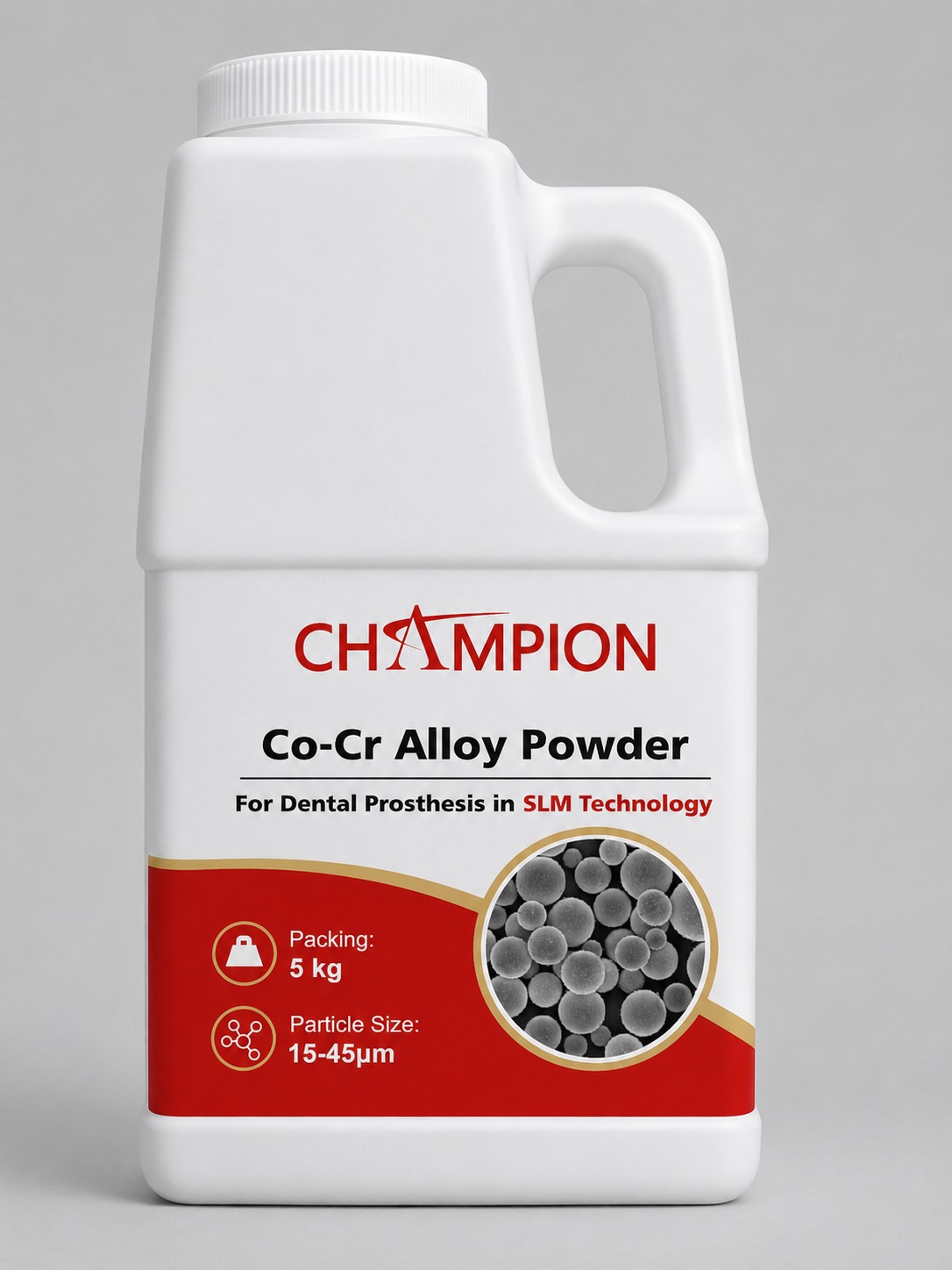
For DMLS or SLM metal powders, factors such as particle-size distribution, powder flowability, purity, and compatibility with the specific 3D printing system are also important. For casting or milling, dental labs should check the relevant processing requirements and material specifications. The selected Co-Cr material should also be appropriate for the intended restoration, such as crowns, bridges, copings, or RPD frameworks.
What are the properties of cobalt chromium dental alloys?
Cobalt-chromium (Co-Cr) dental alloys are known for their high strength, rigidity, hardness, wear resistance, and corrosion resistance. These properties make them suitable for dental restorations and frameworks that need to withstand regular functional forces.
Co-Cr alloys also offer good thermal stability and relatively low density compared with many precious-metal alloys. Depending on the specific alloy formulation, they can be used for crowns, bridges, copings, removable partial denture frameworks, and other metal dental components manufactured through casting, milling, or metal 3D printing.
What factors affect the cost of Co-Cr dental material in India?
The cost of Co-Cr dental material in India can vary depending on the alloy composition, purity, material grade, manufacturer, packaging quantity, and intended manufacturing process.
For Co-Cr powders used in DMLS or SLM 3D printing, factors such as particle-size distribution, powder quality, flowability, and printer compatibility can also influence the price. Imported materials, certifications, supplier support, shipping, and current metal prices may further affect the final cost.




Reviews
There are no reviews yet.