
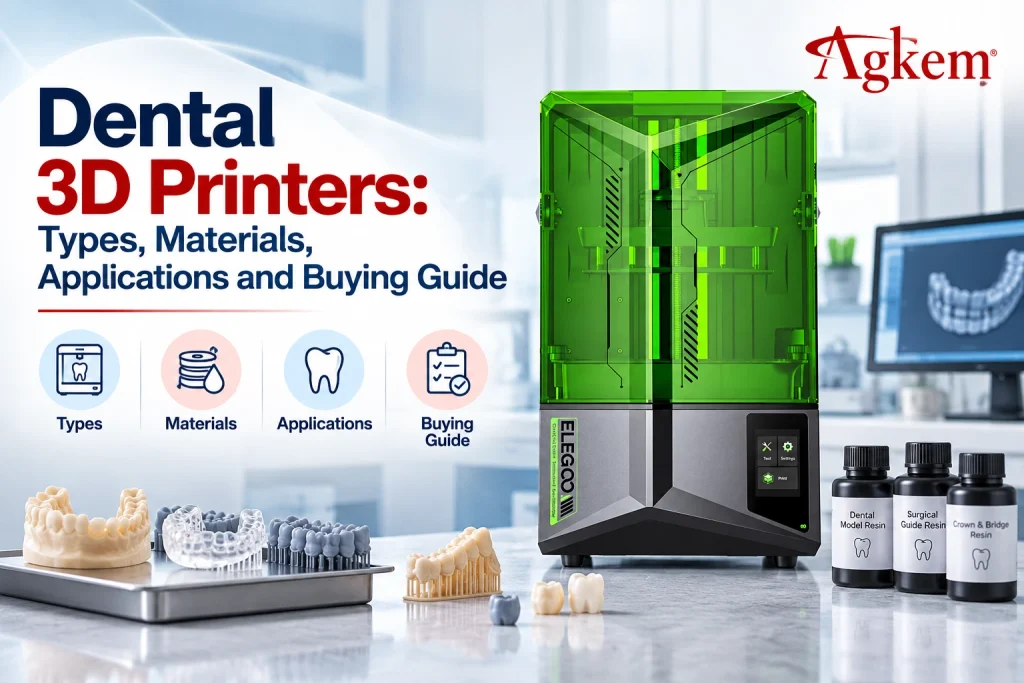
Dental 3D printing is transforming how dental clinics and dental laboratories produce models, guides, appliances and other dental components.
By converting digital designs into physical objects layer by layer, a dental 3D printer supports digital workflows that can reduce manual fabrication steps and improve production flexibility.
For dental laboratories, choosing the right printer requires more than comparing resolution or printing speed.
Technology, build volume, material compatibility, accuracy, post-processing requirements and total operating cost all influence the investment.
This guide explains the types of dental 3D printers, their applications, the materials they use and the key factors to consider before buying a dental 3D printer in India.
What Is a Dental 3D Printer?
A dental 3D printer is a digital manufacturing system that builds three-dimensional objects from computer-generated designs.
The printer converts a digital file into successive layers and creates a physical model or component using a compatible material.
Dental 3D printing is used in dental clinics, dental laboratories, orthodontic practices and manufacturing centres.
Depending on the printer and approved material, applications may include diagnostic models, orthodontic models, surgical guides, custom trays, temporary restorations and other dental components.
The complete workflow generally involves scanning, digital design, print preparation, printing, post-processing and quality checks.
The equipment and materials must match the intended application, particularly when the printed component is intended for intraoral use.
Types of Dental 3D Printers
1. Resin-Based 3D Printers
Resin-based printers use light to cure liquid photopolymer resin layer by layer.
MSLA and LCD printers use a light source and LCD screen to expose each layer, while other resin systems use different light-projection technologies.
These printers are popular for producing detailed models and other components from compatible dental resins.
Their suitability depends on resolution, build volume, resin compatibility and the intended application.
AGKEM offers resin-based printing options from the Elegoo Saturn series, including the Saturn 4 12K and Saturn 4 Ultra 16K.
2. DLP and Other Light-Based Printers
Digital Light Processing (DLP) printers use projected light to cure resin layers. Depending on the system, DLP and LCD-based printers can offer different combinations of speed, resolution, build area and operating costs.
The right choice depends on the objects being printed, the material requirements and the manufacturer’s validated workflow.
Buyers should compare actual specifications rather than assuming that one light-based technology is automatically superior to another.
3. Metal 3D Printers
Metal additive manufacturing systems use technologies such as Direct Metal Laser Sintering (DMLS) to build metal components from powder.
These systems serve different manufacturing needs from resin-based dental printers.
Metal 3D printing can support compatible applications such as cobalt-chromium frameworks, copings and selected implant-related structures.
Equipment, materials, safety requirements and post-processing are substantially different from those of a desktop resin printer.
AGKEM offers dedicated metal printing systems through its DMLS machine category.
Applications of Dental 3D Printing
Dental 3D printers support a range of digital production workflows. The exact applications depend on the printer, material and validated manufacturing process.
1. Dental Models
Printed models can be used for treatment planning, restorative workflows, demonstrations and dental laboratory work. Model resins should be selected according to the required detail, strength and intended use.
2. Orthodontic Models
Dental models can support orthodontic planning and the production of compatible appliances. Dental laboratories should confirm that the printer and material meet the requirements of their particular workflow.
3. Surgical Guides
Certain validated resin systems are designed for manufacturing surgical guides. These applications require appropriate material properties, dimensional accuracy, post-processing and sterilisation compatibility where applicable.
4. Custom Trays and Other Dental Components
Compatible materials and printers can produce custom impression trays and selected dental components. The material’s intended use and instructions determine whether it is appropriate for a particular application.
5. Restorative and Laboratory Workflows
3D printing can complement scanning, CAD design and conventional manufacturing equipment.
Depending on the workflow, dental laboratories may use printed models alongside milling machines, metal printers and sintering furnaces.
Materials Used in Dental 3D Printing
Material selection directly affects the printer’s applications and the properties of the finished component.
- Model resin: Used for compatible diagnostic, restorative and dental laboratory models.
- Surgical guide resin: Designed for specified surgical guide applications when used according to the manufacturer’s instructions.
- Custom tray resin: Used for compatible impression tray workflows.
- Temporary restoration resin: Intended for specified temporary restorative applications, subject to the material’s approved indications.
- Orthodontic resin: Used for compatible orthodontic models and appliances.
- Castable resin: Designed for particular casting workflows, where supported by the relevant material and manufacturing process.
Before purchasing a printer, check its supported resin formulations, recommended exposure settings, build platform compatibility and post-processing requirements.
A printer’s technical ability to cure a resin does not automatically establish that the finished component is suitable for clinical use.
Key Features to Compare Before Buying a Dental 3D Printer
1. Printing Resolution
Resolution influences the level of detail a printer can reproduce. For LCD-based systems, buyers often compare the screen resolution and XY pixel size, alongside layer-height settings.
AGKEM’s Elegoo Saturn 4 12K features a 10-inch monochrome LCD with a resolution of 11,520 × 5,120 pixels and an XY resolution of 19 × 24 micron.
The Saturn 4 Ultra 16K offers a 10-inch 16K monochrome LCD with an XY resolution of 14 × 19 micron.
2. Build Volume
Build volume determines the maximum space available for printing objects in one job. A larger build area can provide more flexibility when printing multiple models or larger components.
Compare the usable build dimensions with the size and quantity of objects your dental laboratory expects to produce.
A larger printer is not necessarily the best choice if your regular workload involves small models and limited batch sizes.
3. Printing Speed
Printing speed depends on the printer’s technology, layer height, resin, object geometry and selected settings. Advertised maximum speeds may not reflect the time needed for an entire job.
Include preparation, printing, washing, curing and any finishing steps when estimating production time.
4. Material Compatibility
Confirm which materials are supported and whether the printer manufacturer provides validated settings for your intended applications.
If you plan to manufacture surgical guides, temporary restorations or other patient-contact components, check the resin’s approved indications and documentation.
5. Ease of Operation
Features such as automatic levelling, intuitive controls, reliable file transfer and monitoring tools can simplify daily use.
These are particularly valuable for dental laboratories that want to introduce 3D printing without creating unnecessary operational complexity.
6. Post-Processing Requirements
Resin printing generally requires appropriate washing and post-curing according to the material manufacturer’s instructions.
Depending on the application, additional finishing and inspection may be necessary.
Include the cost and space requirements of compatible washing and curing equipment when evaluating the complete setup.
Dental 3D Printer Price in India
The price of a dental 3D printer in India depends on the printing technology, resolution, build volume, automation, supported materials and intended application.
A compact resin printer for models has different requirements from a production system designed for specialised dental materials or a metal 3D printer.
The total investment may also include resin, washing and curing equipment, software, accessories, maintenance and operator training.
Before comparing quotations, consider:
- Printer price and included accessories
- Build volume and resolution
- Material costs and availability
- Washing and post-curing equipment
- Software and file compatibility
- Maintenance and replacement components
- Warranty and technical support
There is no single price that applies to every dental 3D printer. Request a current quotation based on your intended applications and required configuration.
Buy Dental 3D Printers Online at AGKEM
AGKEM provides dental laboratory equipment for digital manufacturing, including resin-based 3D printers and separate metal additive manufacturing systems.
Elegoo Saturn 4 12K
The Elegoo Saturn 4 12K is a resin 3D printer featuring a 10-inch 12K monochrome LCD, 11,520 × 5,120 screen resolution and 19 × 24 micron XY resolution.
It also features automatic levelling and a COB light source with a Fresnel collimating lens.
These specifications make it an option to evaluate for detailed resin printing workflows where the required object dimensions and supported materials are compatible with the machine.
Elegoo Saturn 4 Ultra 16K
The Elegoo Saturn 4 Ultra 16K uses MSLA resin printing technology and a 10-inch 16K monochrome LCD.
Its specifications include a 14 × 19 micron XY resolution, a build volume of 211.68 × 118.37 × 220 mm and automatic levelling.
The printer also features a COB light source with a Fresnel collimating lens, built-in Wi-Fi and USB connectivity.
Its build volume and resolution make it worth considering for workflows requiring detailed resin prints.
Before purchasing, match the printer with the resin, post-processing equipment and intended dental application.
How to Choose the Right Dental 3D Printer
Use the following checklist to narrow your options:
- Define the application: Decide whether you primarily need models, surgical guides, custom trays, temporary restorations or other components.
- Choose the technology: Compare resin-based printing with metal additive manufacturing if your production requirements include metal parts.
- Match the material: Verify compatibility and approved indications for the intended use.
- Compare resolution and build volume: Ensure the machine meets your detail, object-size and batch-production requirements.
- Calculate the full workflow cost: Include materials, washing, curing, software, maintenance and training.
- Check software compatibility: Confirm that your existing scanners and CAD systems can supply suitable files.
- Evaluate support: Consider installation guidance, warranty, maintenance and access to replacement components.
For a dental laboratory, the best printer is the one that meets its actual production requirements and integrates efficiently with its existing digital workflow.
Frequently Asked Questions
1. What is a dental 3D printer used for?
A dental 3D printer can produce compatible dental models, surgical guides, custom trays, orthodontic components and other items, depending on the printer, material and validated workflow.
2. What is the difference between a dental 3D printer and a metal 3D printer?
Many dental 3D printers use resin to produce models and other compatible components. Metal 3D printers use specialised additive manufacturing processes to produce metal parts.
They have different materials, equipment requirements and applications.
3. How much does a dental 3D printer cost in India?
The price depends on technology, resolution, build volume, automation and included accessories. Resin, washing and curing equipment, software and maintenance should also be considered when calculating the total investment.
4. What resolution should I look for in a dental 3D printer?
The required resolution depends on the intended application and material. Compare XY resolution, layer-height options and real-world workflow requirements rather than relying on screen resolution alone.
5. Can a resin 3D printer produce surgical guides?
Yes, when the printer and a compatible resin are validated for the intended surgical guide application. The material’s instructions, post-processing requirements and clinical suitability must be followed.
6. Does every dental 3D printer require post-processing?
Most resin-based dental printing workflows require washing and post-curing. The exact steps depend on the resin and the manufacturer’s processing instructions.
7. What is the difference between 12K and 16K resin printers?
The labels refer to different screen resolutions. A 16K printer may offer a smaller pixel size, depending on the screen dimensions, but finished detail also depends on optics, calibration, resin, exposure and other operating factors.
8. Where can I buy a dental 3D printer in India?
AGKEM offers resin-based printers such as the Elegoo Saturn 4 12K and Saturn 4 Ultra 16K, alongside separate metal 3D printing systems.
Explore the AGKEM Dental 3D Printer range to review available options.
Explore Dental 3D Printing Solutions at AGKEM
Dental 3D printing allows dental clinics and dental laboratories to incorporate digital manufacturing into their workflows.
Choosing the right equipment requires a clear understanding of the intended application, material compatibility, resolution, build volume and post-processing requirements.
Explore AGKEM’s dental 3D printing options to compare available systems and identify equipment that fits your laboratory’s production needs.