
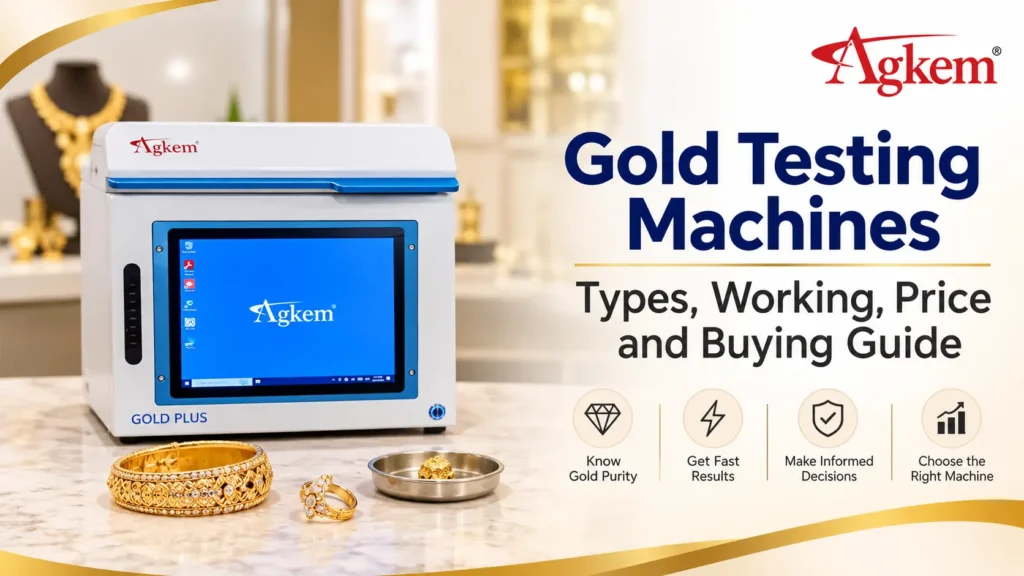
Gold testing is an important part of jewellery retail, manufacturing, refining and trading. The purity of a gold item directly affects its value, so businesses need a reliable way to verify its composition before buying, selling or processing it.
Traditional methods such as acid testing and touchstone testing are still used, but they have limitations. They may require experience, can be less precise and may not provide a detailed breakdown of the metals present in an alloy. Gold testing machines offer a faster way to analyse metal composition, particularly when multiple items need to be checked throughout the day.
Modern gold testing machines use technologies such as X-ray fluorescence (XRF) to analyse metals without damaging the sample. The results can help jewellery businesses verify gold purity, identify other metals in an alloy and make informed decisions during transactions.
What Is a Gold Testing Machine?
A gold testing machine is a device used to determine the purity and composition of gold and other precious metals. It measures the metal content of a sample and helps identify the proportion of gold present.
Gold jewellery is rarely made from pure gold. It is commonly mixed with metals such as silver, copper, zinc and other elements to improve hardness, durability and suitability for jewellery making. These additions affect the colour, properties and purity of the finished product.
A gold testing machine can help determine the composition of an alloy and estimate its gold content. Depending on the technology used, the machine may also identify other precious metals, detect certain alloying elements and analyse different types of metal samples.
Gold testing machines are used by jewellery shops, manufacturers, refiners, pawn businesses, gold buyers and laboratories that require metal composition analysis.
How Does a Gold Testing Machine Work?
The working principle depends on the technology used by the machine. Many modern precious metal analysers use X-ray fluorescence, commonly known as XRF.
In XRF testing, the machine directs X-rays towards the metal sample. The energy causes the elements present in the sample to emit their own characteristic fluorescent X-rays. The detector measures this response, and the system analyses the collected signals to identify the elements and estimate their concentrations.
The process is generally straightforward:
- The sample is placed in the testing position.
- The machine directs X-rays towards the sample.
- The metal produces a characteristic response.
- The detector collects the signals.
- The software analyses the data and displays the metal composition.
XRF analysis is useful because it can test metals without cutting, melting or chemically altering the sample. Testing time varies by machine, sample and selected analysis settings.
Types of Gold Testing Machines
Gold testing machines differ in their technology, design, sample handling and intended application. The right machine depends on how frequently testing is performed, the type of items being tested and the level of analysis required.
1. XRF Gold Testing Machines
XRF gold testing machines are widely used for precious metal analysis. They measure the elemental composition of a sample by analysing the fluorescent X-rays emitted when the sample is exposed to X-rays.
These machines can identify gold and other elements present in the sample. Depending on the model, they may analyse several precious metals at the same time and provide a composition report.
XRF analysers are commonly used in jewellery showrooms, gold-buying businesses, manufacturing units, refineries and quality-control environments.
Their main advantage is that testing is non-destructive. Jewellery can be tested without damaging its appearance or altering the item.
2. Handheld Gold Testing Machines
Handheld analysers are designed for users who need to test metals at different locations or inspect items without placing them inside a fixed testing chamber.
They are useful for jewellery buyers, field inspections, metal traders and businesses that require portability. Some handheld analysers can also test a wider range of alloys beyond precious metals.
The choice between a handheld and a benchtop machine depends on the working environment. A showroom or laboratory that tests jewellery at a fixed location may prefer a benchtop analyser, while a business that regularly moves between locations may benefit from a portable unit.
3. Benchtop Gold Testing Machines
Benchtop analysers are designed for fixed workstations. They usually have a sample chamber where jewellery or metal samples are positioned before analysis.
A benchtop machine can be suitable for jewellery stores, laboratories and manufacturing facilities that perform regular testing. The enclosed testing arrangement also helps position the sample consistently.
Some models include cameras that allow operators to view the testing point before analysis. This can be useful when testing small areas or items with different shapes.
4. Electronic Gold Testing Machines
Electronic gold testing devices use electrical or other measurement-based methods to estimate gold purity. The technology and capabilities vary considerably between models.
These devices may be suitable for certain testing applications, but buyers should compare their measurement method, supported sample types, accuracy, limitations and calibration requirements before choosing one.
For businesses that need a detailed elemental breakdown rather than a purity estimate alone, an XRF analyser may be a more suitable option.
XRF Testing vs Acid Testing: Which is better?
Acid testing has been used in jewellery businesses for many years. It typically involves rubbing a sample against a touchstone and applying testing acids to compare the reaction.
The method can provide a useful indication of gold purity when performed by an experienced operator. However, results depend on technique and interpretation. It also involves chemicals that require careful handling.
XRF testing provides a digital analysis of the elements present in the tested area. It can identify multiple metals and display their estimated concentrations, depending on the machine’s capabilities.
| Feature | Acid Testing | XRF Testing |
| Testing method | Chemical reaction | X-ray fluorescence |
| Sample damage | May leave marks or require testing material | Generally non-destructive |
| Results | Based on comparison and interpretation | Digital composition analysis |
| Multiple metals | Limited identification | Can identify several elements |
| Testing speed | Depends on the operator | Results available within the machine’s testing cycle |
| Operator skill | Requires experience | Requires training and correct sample positioning |
| Reporting | Usually manual | Digital results may be stored or printed |
Acid testing may remain useful for basic checks, while XRF testing is more suitable for businesses that need faster and more detailed metal analysis.
Applications of Gold Testing Machines
Gold testing machines are used in different parts of the jewellery and precious metals industry.
1. Jewellery Retail
Jewellery retailers can use gold analysers to verify the composition of jewellery before buying, selling or exchanging items. This is particularly useful when dealing with old jewellery, customer exchange transactions or items whose purity markings need to be verified.
2. Gold Buying Businesses
Businesses that purchase used gold need to assess metal composition before calculating the value of an item. A gold analyser can help provide a consistent testing process during transactions.
3. Jewellery Manufacturing
Manufacturers can use precious metal analysers to check raw materials, alloys and finished products. Testing can help confirm whether the material meets the required composition before it moves to the next production stage.
4. Refining and Metal Processing
Refiners and metal processors work with different metal compositions. Analysers can help inspect incoming materials and support quality control during processing.
5. Quality Control
Gold testing machines can be used to check material consistency and investigate differences between samples. This is relevant to businesses that work with multiple suppliers or process different metal alloys.
Factors That Affect the Price of a Gold Testing Machine
The price of a gold testing machine depends on its technology, analytical capabilities and overall configuration. Two machines that look similar may have different detectors, software, analysis ranges and testing capabilities.
1. Testing Technology
The measurement technology used by the machine is one of the main factors affecting its price. XRF analysers, for example, use different components and configurations depending on the level of analysis required.
2. Detector Type
The detector plays an important role in collecting and processing the signals generated during analysis. Different detector technologies can affect performance, sensitivity and the machine’s suitability for particular applications.
3. Elements and Metals Supported
Some analysers are designed specifically for precious metals, while others can analyse a wider range of elements and alloys. The number of detectable elements and the machine’s analytical range can influence its price.
4. Testing Speed
Machines with different analysis settings may offer different testing times. Buyers should compare the testing speed with their daily workload rather than selecting a machine based on the shortest advertised testing time alone.
5. Software and Reporting Features
Data storage, result management, report generation, connectivity and other software functions can add value for businesses that need to maintain testing records.
6. Brand, Service and Support
The manufacturer’s reputation, availability of technical support, training, warranty and service arrangements should also be considered. A testing machine is an equipment investment, so support after installation matters.
How to Choose the Right Gold Testing Machine
Before purchasing a gold testing machine, consider how it will be used in your business.
- Understand your testing requirements: A jewellery retailer testing customer items may have different requirements from a manufacturer checking alloys or a refinery analysing metal samples.
- Compare the analysis capabilities: Check which metals and elements the machine can detect and whether its analytical range suits your work.
- Check the testing area: The size of the sample chamber, measurement spot and positioning system can affect the types of jewellery and samples you can test.
- Consider daily testing volume: Businesses that test large numbers of items should pay attention to testing speed, workflow and data management.
- Review the reporting features: If your business maintains records or provides customers with testing results, software and reporting capabilities may be useful.
- Evaluate support and training: Make sure you understand the installation process, operator training, calibration requirements and after-sales support available for the equipment.
Gold Testing Machine Price in India
Gold testing machine prices in India vary depending on the model, technology, detector, testing capabilities and included features.
Basic testing devices may cost less, while professional XRF precious metal analysers can represent a larger investment because of their analytical technology and software capabilities. Handheld and benchtop models also differ in price based on their design and intended applications.
Instead of comparing machines only by price, buyers should evaluate the testing capabilities they need. A jewellery showroom that checks gold purity throughout the day may benefit from investing in an analyser that offers reliable results, straightforward operation and appropriate support.
For an accurate price, it is best to compare models based on the required specifications and request a quotation from the supplier.
Buy Gold Testing Machines Online at AGKEM
AGKEM offers precious metal analysers for jewellery businesses and metal analysis applications. Its range includes benchtop and handheld analysers designed for different testing requirements.
Agkem Gold Plus Precious Metal Analyzer
The Agkem Gold Plus is a compact XRF analyser designed for precious metal testing. It provides non-destructive analysis and can analyse gold, silver, platinum, palladium and other precious metals.
The machine includes an integrated camera to help position the sample and a small-spot collimator for targeted analysis. Its one-button operation is designed to make testing straightforward for showroom and quality-control applications.
APM 500 Precious Metal Analyzer
The APM 500 is designed to analyse solid, powder and liquid samples. It supports analysis of up to 10 metals and features a digital multichannel analyser.
The machine has a selectable testing time of 5 to 60 seconds, allowing the operator to adjust the analysis duration based on the testing requirement.
Niton DXL Precious Metal Analyzer
The Niton DXL is designed for precious metal analysis and provides non-destructive testing. It can analyse precious metals and display results on its colour touchscreen.
The analyser also includes data storage and connectivity features for businesses that need to retain testing records.
Businesses can compare the available analysers based on sample type, testing requirements, analysis range, portability and software features before selecting a model.
Frequently Asked Questions
1. What is the best machine for testing gold purity?
The best gold testing machine depends on the type of business and testing requirements. XRF analysers are a popular choice for jewellery businesses that need non-destructive metal composition analysis.
2. Are gold testing machines accurate?
Accuracy depends on the machine, calibration, sample condition, testing method and measurement settings. Buyers should review the manufacturer’s specifications and understand the limitations of the equipment.
3. Can a gold testing machine test jewellery without damaging it?
XRF gold testing machines generally provide non-destructive analysis. The machine measures the metal composition without cutting or melting the jewellery.
4. How long does a gold testing machine take to test an item?
Testing time varies by machine and selected settings. Some analysers provide results within seconds, while others allow the operator to select a longer analysis period.
5. Can gold testing machines test silver and platinum?
Many precious metal analysers can test metals such as silver, platinum, palladium and other elements, depending on their supported analysis range.
6. How much does a gold testing machine cost in India?
Prices vary based on technology, detector, analysis capabilities, software and configuration. Professional XRF analysers generally cost more than basic electronic testing devices.
7. Is XRF testing better than acid testing?
XRF testing offers digital elemental analysis and is generally non-destructive. Acid testing can still be useful for basic checks, but it depends on the operator’s experience and involves chemical testing.
Choosing a Gold Testing Machine for Your Business
A gold testing machine should match the way your business handles precious metals. Jewellery retailers may prioritise quick testing and simple operation, while manufacturers and laboratories may need broader elemental analysis and data management features.
Comparing the machine’s technology, testing capabilities, supported metals, sample handling and service support can help you make a better purchasing decision.
AGKEM offers gold and precious metal analysers for businesses looking to add metal composition testing to their operations. Explore the available models to find a machine suited to your testing requirements.