
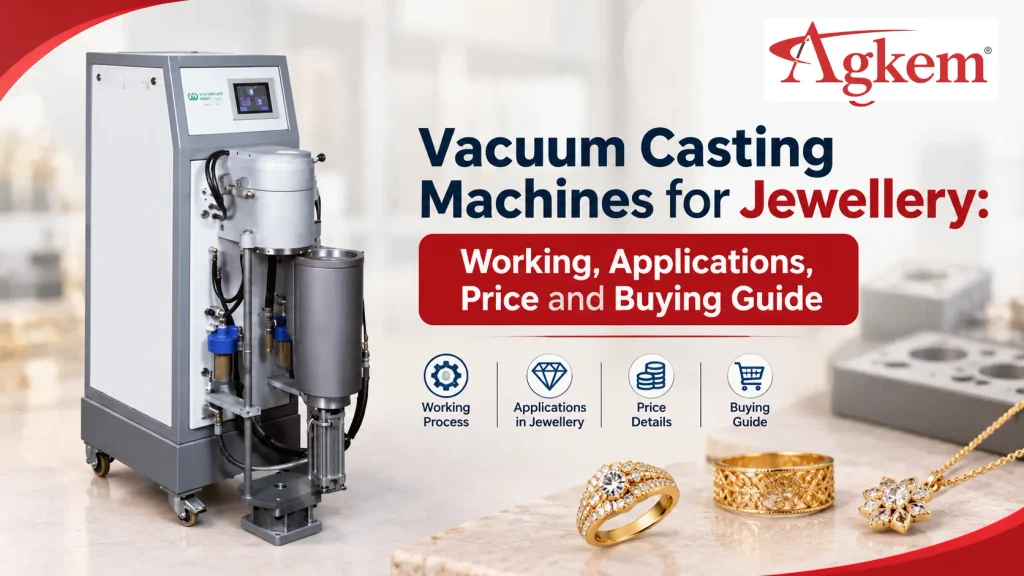
Vacuum casting is widely used in jewellery manufacturing to produce detailed metal pieces from wax or other patterns. The process helps jewellery manufacturers create rings, pendants, earrings, bracelets and other designs with consistent shapes and fine details.
A vacuum casting machine is used to introduce molten metal into a mould while reducing the presence of air that can interfere with the casting process. This is particularly useful when manufacturing jewellery with intricate designs, small features or complex shapes.
For jewellery businesses looking to improve casting quality and production consistency, understanding how vacuum casting works, the equipment involved and the factors affecting machine selection can help make the right investment.
What Is a Vacuum Casting Machine for Jewellery?
A vacuum casting machine is equipment used to cast molten metal into a prepared mould with the help of vacuum pressure. In jewellery manufacturing, the mould is typically created through the investment casting process, commonly known as lost-wax casting.
The process begins with a wax model of the jewellery design. The wax pattern is attached to a sprue system and placed inside a casting flask. Investment material is poured around the wax pattern and allowed to harden. The wax is then removed through a burnout process, leaving a cavity that reproduces the original design.
The casting machine melts the required metal and helps introduce it into the prepared mould. Vacuum pressure assists the movement of molten metal into the mould cavity, allowing the design to be reproduced in metal.
Vacuum casting machines are used for gold, silver and other metals, depending on the machine’s specifications and configuration.
How Does Vacuum Casting Work?
Jewellery vacuum casting generally involves several stages, from preparing the wax model to removing and finishing the final metal casting.
1. Creating the Wax Pattern
The jewellery design is first converted into a wax pattern. This can be created using a wax injector, a mould or a digital manufacturing process, depending on the production setup.
The wax pattern represents the shape and details of the final jewellery piece.
2. Preparing the Casting Tree
Multiple wax patterns may be attached to a central wax sprue to create a casting tree. This arrangement allows several pieces to be cast in a single cycle, depending on the flask size and production requirements.
3. Investment and Burnout
The wax tree is placed inside a flask, and investment material is poured around it. Once the investment hardens, the flask undergoes a burnout process.
The wax is removed through heating, leaving a cavity inside the investment material. The burnout process also prepares the mould for receiving molten metal.
4. Melting the Metal
The required metal or alloy is heated until it reaches the appropriate melting temperature. The temperature depends on the metal being used and the casting requirements.
5. Casting Under Vacuum
The casting machine uses its vacuum system to assist the movement of molten metal into the mould. The casting arrangement and pressure system vary depending on the machine design.
The metal fills the mould cavity and takes the shape of the wax pattern.
6. Cooling and Removing the Casting
After the casting cycle, the metal is allowed to cool according to the process requirements. The investment material is then removed to reveal the cast jewellery pieces.
The pieces are separated from the sprue, cleaned and sent for finishing, polishing or further processing.
Types of Vacuum Casting Machines for Jewellery
Vacuum casting machines differ in their melting systems, casting mechanisms, capacity and level of automation.
1. Vacuum Casting Machines
These machines use a vacuum system to assist molten metal movement into the mould. They are used for jewellery casting where mould filling and casting quality are important considerations.
The machine configuration, vacuum capability and flask arrangement determine its suitability for different designs and production requirements.
2. Vacuum Pressure Casting Machines
Vacuum pressure casting machines combine vacuum-assisted mould preparation or filling with controlled pressure during casting. Depending on the design, pressure may be used to help move molten metal into the mould and support the casting process.
These machines are used for jewellery production where detailed designs and consistent mould filling are required.
3. Induction Vacuum Casting Machines
Induction-based vacuum casting machines use induction heating to melt the metal. The casting process takes place within a system designed to combine metal melting with vacuum-assisted casting.
Induction heating allows controlled melting and is used in jewellery production for metals such as gold and silver. Machine capacity and supported metals vary by model.
4. Automatic and Semi-Automatic Casting Machines
The level of automation can differ between machines. Some systems provide programmable controls for melting and casting parameters, while others require more manual operation.
Automatic controls can help standardise process settings across production cycles. The right level of automation depends on production volume, operator requirements and the complexity of the casting process.
Applications of Vacuum Casting Machines in Jewellery Manufacturing
Vacuum casting machines are used in several jewellery manufacturing applications.
1. Casting Rings
Rings often include fine details, decorative patterns, stone settings and varying thicknesses. Vacuum casting can be used to reproduce these designs from prepared moulds.
2. Casting Pendants and Necklaces
Pendants can include intricate shapes, textures and decorative features. The casting process helps reproduce the original wax pattern in metal.
3. Earrings
Jewellery manufacturers can use casting machines to produce different earring designs, including lightweight pieces, decorative shapes and matching pairs.
4. Bracelets and Decorative Jewellery
Vacuum casting can be used for selected bracelet designs and other decorative jewellery components that are suitable for investment casting.
5. Production of Multiple Jewellery Pieces
Casting trees allow several wax patterns to be arranged within a single flask. This can help manufacturers process multiple pieces during one casting cycle, depending on the machine and flask capacity.
Benefits of Vacuum Casting in Jewellery Production
1. Reproducing Detailed Designs
The investment casting process allows jewellery manufacturers to reproduce patterns with detailed shapes and surface features. The final result depends on the quality of the wax pattern, investment material, burnout process and casting conditions.
2. Consistent Production
Using controlled casting parameters can help manufacturers maintain consistency across production batches. This is particularly useful when producing multiple pieces based on the same design.
3. Suitable for Different Jewellery Designs
Investment casting can be used for a wide range of jewellery shapes and designs. The suitability of a particular design depends on its size, geometry, metal type and casting requirements.
4. Better Control Over the Casting Process
Modern machines may include programmable controls and monitoring systems for melting and casting parameters. These features help operators manage the casting cycle more consistently.
5. Support for Jewellery Manufacturing Workflows
Vacuum casting machines form part of a wider jewellery production setup that may include wax injection, 3D printing, burnout furnaces, melting equipment, finishing machines and polishing equipment.
Vacuum Casting Machine Price in India
The price of a vacuum casting machine in India depends on its capacity, heating technology, casting mechanism, automation level and supported metals.
Smaller machines designed for limited production requirements may have a different cost structure from larger industrial casting systems. Machines with induction heating, programmable controls, advanced vacuum systems and higher metal capacity generally require a larger investment.
Other factors that affect the price include:
- Metal melting capacity
- Supported metal types
- Vacuum and pressure systems
- Heating technology
- Flask dimensions
- Control systems and automation
- Cooling system requirements
- Installation and service support
When comparing machines, buyers should evaluate the equipment based on their actual production requirements rather than price alone. The machine’s capacity should match the typical batch size, jewellery designs and metals used in production.
How to Choose the Right Vacuum Casting Machine
Choosing the right vacuum casting machine requires understanding the type of jewellery being produced and the production workflow.
1. Consider Your Production Volume
A jewellery workshop producing a limited number of pieces may have different requirements from a manufacturing unit handling larger batches. Consider the number of pieces produced per cycle and the expected daily production volume.
2. Check Metal Compatibility
Confirm that the machine is suitable for the metals and alloys used in your production. Different metals have different melting temperatures and casting requirements.
3. Evaluate Melting Capacity
The machine’s melting capacity should match your typical casting batch. Buying a machine with a capacity that is too small can restrict production, while an unnecessarily large machine may increase the investment.
4. Review the Casting System
Understand how the machine uses vacuum, pressure or other mechanisms to assist casting. The casting system should suit the jewellery designs and moulds used in your production.
5. Check Automation and Controls
Programmable controls, temperature monitoring and process settings can help operators manage repeatable casting cycles. Review the controls and operating workflow before making a purchase.
6. Consider Space and Utilities
Check the machine’s dimensions, power requirements, cooling requirements and installation conditions. Some machines may require additional equipment such as a water chiller or cooling system.
7. Evaluate Service and Support
Installation, operator training, maintenance and after-sales service are important considerations when investing in manufacturing equipment.
Buy Vacuum Casting Machines Online at AGKEM
AGKEM offers jewellery manufacturing equipment, including vacuum casting machines for jewellery production.
Vacuum Casting Machine
AGKEM’s vacuum casting machine range includes the FIM/MCE vacuum casting furnace designed for producing cast jewellery, ingots and sheets.
The system combines casting technology with controls designed to reduce manual operations during the casting process. Melting, pouring, grain tank loading and discharge operations are controlled through a PLC unit with a touchscreen panel. The system can store melting programmes according to the alloy being processed.
The machine also includes water cooling through a heat exchanger, process parameter monitoring and computerised alarm diagnostics.
The available configurations differ in their specifications, including power, crucible capacity, flask dimensions, temperature and cycle time. Buyers should review the specific configuration based on their production requirements.
Frequently Asked Questions
1. What is a vacuum casting machine used for in jewellery manufacturing?
A vacuum casting machine is used to cast molten metal into a prepared investment mould. It helps jewellery manufacturers produce pieces from wax patterns, including designs with intricate shapes and details.
2. Which metals can be used in vacuum casting machines?
The supported metals depend on the machine’s specifications. Jewellery casting machines may be designed for metals such as gold, silver and other alloys.
3. Is vacuum casting suitable for small jewellery designs?
Yes, investment casting is commonly used to produce jewellery with small details and intricate designs. The final quality depends on the pattern, mould preparation, casting process and machine configuration.
4. What is the difference between vacuum casting and traditional casting?
Vacuum casting uses a vacuum system to assist the casting process and mould filling. The exact difference depends on the traditional casting method being compared, but vacuum-assisted systems are designed to control the casting process and reduce problems associated with mould filling.
5. How many jewellery pieces can be cast in one cycle?
The number of pieces depends on the flask size, casting tree arrangement, machine capacity and size of the jewellery designs. Multiple wax patterns can be arranged in a casting tree for production in a single cycle.
6. What is the price of a vacuum casting machine in India?
The price depends on the machine’s capacity, heating system, casting mechanism, automation, supported metals and configuration. Buyers should request a quotation based on their production requirements.
7. Is a vacuum casting machine suitable for jewellery manufacturers?
Vacuum casting machines are suitable for jewellery manufacturers who use investment casting to produce metal jewellery. The appropriate machine depends on production volume, jewellery designs, metal types and the existing manufacturing setup.
Investing in a Vacuum Casting Machine
A vacuum casting machine is an important part of a jewellery manufacturing setup, particularly for businesses producing jewellery through investment casting. The machine should be selected according to the designs being manufactured, metals used, production volume and casting workflow.
Before investing, compare machine capacity, melting technology, casting mechanism, controls, utilities and service support. A machine that matches your production requirements can help establish a more consistent casting process and support future manufacturing needs.
Explore AGKEM’s Vacuum Casting Machine to learn more about the available equipment for jewellery manufacturing.